Volume: 5 Issue: 4 December 2025
FULL TEXT
Reconstruction of a Complex Plantar Defect Following a Thermal Foot Burn Secondary to Diabetic Neuropathy With a Free Flap: A Case Report of Flap Survival Despite Prolonged Adjacent Tissue
ABSTRACT
Foot burns developing on the background of diabetic neuropathy may result in severe soft tissue loss despite limited surface area because of delayed recognition, deep tissue injury, infection, and vascular insufficiency. In selected patients, free tissue transfer is an effective limb-salvaging reconstructive option. In this report, we describe a 71-year-old morbidly obese woman with diabetes mellitus, diabetic neuropathy, hypertension, hyperlipidemia, and coronary artery disease who was hospitalized for necrotic wounds that developed after thermal burns to both feet. On admission, the left foot showed severe necrosis of the first toe and plantar surface, with deep tissue loss; the right foot showed deep burn foci with necrotic components involving the first, second, and third toes. Preoperative laboratory evaluation revealed poor glycemic control, anemia, hypoalbuminemia, and marked inflammatory findings. Vascular assessment identified distal arterial lesions requiring intervention, and revascularization was performed. After repeated debridement and amputation, a complex plantar defect developed and was reconstructed with a free radial forearm flap. Postoperatively, the flap remained clinically viable with adequate perfusion. However, wound dehiscence, fibrin accumulation, marginal necrosis, and delayed healing developed in the adjacent wound bed; the patient required multiple additional debridement, negative pressure wound therapy, additional grafting, and close wound care. Ultimately, wound closure was achieved, and the patient was transferred to her treatment center abroad for continuation of care. In diabetic thermal foot injuries, free flap success should not be evaluated solely by flap perfusion. Even when flap viability is maintained, impaired wound biology in the surrounding tissues, infection burden, neuropathy, and vasculopathy may delay healing. In this patient group, successful outcomes require combined planning of revascularization, serial debridement, appropriately timed free flap reconstruction, and prolonged wound bed optimization.
KEY WORDS: Case report, Diabetic foot, Free flap, Plantar reconstruction, Radial forearm flap, Thermal burn
INTRODUCTION
In patients with diabetes mellitus, foot burns are often recognized late, especially when peripheral neuropathy is present, due to diminished pain and thermal sensation; as a result, patients frequently present with deeper tissue injury.1,2 In patients with diabetes, lower extremity burns are associated with a higher rate of full-thickness injury, longer hospital stay, more frequent infection, and a greater risk of amputation despite similar total burn surface area.1,3 Concomitant vasculopathy, impaired immune response, hyperglycemia, malnutrition, and susceptibility to infection further complicate wound healing in this population.1
Reconstruction of the plantar surface is one of the most challenging areas in reconstructive surgery because this surface is a weight-bearing anatomical region with thick, specialized skin, exposure to shear forces, and frequent underlying tendon or bone exposure.4 In extensive and deep plantar defects, transfer of vascularized tissue often becomes unavoidable. In diabetic foot wounds, free tissue transfer can provide high flap survival and limb salvage rates when used in appropriately selected patients with adequate vascular preparation.5,6
In this case report, we present a reconstruction of a complex plantar defect secondary to a thermal foot burn in the setting of diabetic neuropathy using a free radial forearm flap. The distinguishing feature of this case is the prolonged and multistage healing course resulting from persistent healing impairment in the adjacent tissues despite maintained flap viability in the postoperative period.
CASE REPORT
A 71-year-old woman was admitted to our clinic with thermal burns and necrotic wounds involving both feet. Her medical history included diabetes mellitus, diabetic neuropathy, hypertension, hyperlipidemia, coronary artery disease, and morbid obesity. According to the history obtained, burns had developed after contact with a hot water source; because of neuropathy, she did not recognize the injury at an early stage and therefore had reached appropriate treatment with delay.
On physical examination at admission, the left foot demonstrated advanced necrosis of the first toe and patchy necrotic deep third- to fourth-degree thermal burn areas extending from the first toe to the plantar surface. The right foot showed more limited but still deep burn areas with necrotic components involving the first, second, and third toes. A foul-smelling, infected-appearing wound and advanced soft tissue destruction of the plantar aspect of the left foot were noted. Despite the limited surface area, the clinical picture was consistent with deep tissue involvement, infection, and circulatory impairment (Figure 1).
Initial laboratory evaluation revealed markedly poor glycemic control, with an HbA1c level of 8.1%. C-reactive protein level was 62.7 mg/L, supporting the presence of infection and inflammation. The patient was anemic, with hemoglobin levels ranging between 7.9 and 9.2 g/dL during the early period. Albumin levels ranged from 2.7 to 3.1 g/dL, suggesting malnutrition and an unfavorable biological background for wound healing. Platelet counts were markedly elevated and were interpreted as reactive thrombocytosis. In the initial wound and tissue cultures, Proteus mirabilis growth was detected. These findings demonstrated that the patient had a high-risk wound healing profile both metabolically and infectiously.
After admission, vascular evaluation of the lower extremities was performed. The initial Doppler ultrasonographic examination was technically suboptimal because of obesity and poor patient compliance, although flow in the distal arterial structures was reported. However, further angiographic evaluation demonstrated approximately 70% stenosis at the origin of the anterior tibial artery and approximately 80% stenosis at the tibioperoneal trunk in the left lower extremity. A short distal segment occlusion was present in the posterior tibial artery, although collateral circulation was observed. On the right side, posterior tibial artery occlusion was present. Percutaneous transluminal angioplasty was performed for the 2 critical stenotic lesions in the left lower extremity to improve distal perfusion. This revascularization was considered a preparatory step for the subsequent reconstruction.6
During the first days of hospitalization, serial debridement was performed for the infected and necrotic areas. In the left foot, the necrotic first toe and associated necrotic tissues were removed, and deep infected areas were debrided. Histopathological examination of the amputation specimen demonstrated focal osteonecrosis, active chronic osteomyelitis, ulceration, necrosis, and purulent inflammation. These findings confirmed deep infected tissue loss extending beyond a superficial burn lesion.
During follow-up, a complex open wound measuring approximately 10 × 8 cm with tendon exposure persisted in the plantar region (Figure 2). Secondary healing with conventional dressings and debridement alone was considered functionally and biologically inadequate. Later, during hospitalization, after repeated debridement and wound bed preparation, a fasciocutaneous free flap was harvested from the left radial forearm to reconstruct the plantar defect of the left foot. At the recipient site, the anterior tibial artery and its accompanying veins were prepared. After completion of the microvascular anastomoses, the flap was inset into the defect. The donor site was closed with a split-thickness skin graft.
In the early postoperative period after free flap transfer, the flap was warm, capillary refill was present, and clinical perfusion appeared satisfactory. Serial physical examinations showed adequate flap circulation. The clinically viable course of the flap suggested that the selected reconstructive strategy after revascularization had been technically successful (Figure 3).
Postoperative vascular assessment with Doppler ultrasonography demonstrated no acute deep venous thrombosis in the deep venous system of the left lower extremity. Arterial Doppler examination reported that the main arteries of the left lower extremity were patent; however, a monophasic flow pattern was present in the dorsalis pedis artery. This finding suggested impaired distal hemodynamics and limited reserve despite the absence of major occlusion.
Despite preservation of flap circulation, the adjacent wound bed did not heal as expected during follow-up. Periodic dehiscence, fibrin accumulation, marginal necrosis, and persistent open wound areas were observed on both the plantar and dorsal aspects (Figure 4). Delayed healing foci also developed at the donor and graft sites. For this reason, the patient underwent multiple additional debridement throughout hospitalization; negative pressure wound therapy was applied; supplementary grafting was performed; and the open areas around the flap were managed progressively with primary closure attempts and dressing modifications.
In subsequent cultures, Pseudomonas aeruginosa was isolated from wound and tissue samples. At a later stage, Acinetobacter baumannii growth was also reported in some cultures, and consultation on infectious diseases suggested that part of this finding might represent colonization. Throughout the course, the patient received culture-directed antibiotic therapies. Nevertheless, clinical observation indicated that the main problem was not flap necrosis but rather impaired wound healing in the adjacent tissues, recurrent superficial tissue loss, and irregular progression of granulation tissue.
During her prolonged hospital stay, additional systemic problems including hyponatremia, anemia, glycemic fluctuations, limited mobilization, and urinary tract infection were also observed. All of these conditions were considered factors potentially detrimental to wound healing.
In the final stage of treatment, the open areas were closed through repeated debridement, local wound care, negative pressure therapy, additional grafting, and primary closure attempts. The free flap remained viable, and no loss of flap circulation developed (Figure 5). The adjacent wound beds gradually came under control, and the patient was discharged in stable condition. She was referred to her treatment center abroad for continuation of wound care and rehabilitation.
DISCUSSION
Foot burns in patients with diabetic neuropathy are injuries that often appear minor initially but progress into deeper tissue involvement and become complicated due to delayed presentation.1,2 Goutos and colleagues reported that delayed presentation to health care facilities after burn injury is more frequent in patients with diabetes and is associated with a more severe clinical course.1 Thng and colleagues likewise emphasized that diabetic foot burns are commonly associated with infection, deep tissue injury, and risk of amputation.2 Our case represented a typical yet severe example of this patient group, characterized by delayed recognition related to neuropathy, infection, and deep plantar tissue loss.
The primary goal of plantar surface reconstruction is not merely wound closure but also the provision of durable, well-vascularized, and as stable as possible soft tissue coverage for a weight-bearing region.4 In their systematic review, Crowe and colleagues found no single ideal reconstructive method for plantar defects and reported that decision-making should be based on defect size, location, surrounding tissue quality, and the patient's systemic condition.4 In our patient, simple grafting or secondary healing was not considered sufficient because of tendon exposure, a deep plantar cavity, and marked biological compromise in the surrounding tissue. Therefore, vascularized tissue transfer was required.
The success of free tissue transfer in diabetic foot wounds has been supported by increasingly robust data in recent years. In a systematic review and meta-analysis from Bhat and colleagues, among diabetic foot cases treated with free flaps, complete flap survival was reported as 88%, major amputation rate as 10%, and ambulation rate as 87%.5 These results clearly demonstrated the limb-salvaging effect of free flaps when appropriate patient selection and multidisciplinary management are applied. Similarly, Chang and colleagues reported high flap success rates in free tissue transfers performed after endovascular revascularization for distal vascular lesions.6 In our case, balloon angioplasty of the critical stenoses detected on preoperative angiography also appeared to have an important role in preserving flap viability.
The most striking aspect of our case was the prolonged healing of the adjacent tissues despite technical success and sustained viability of the flap. This finding demonstrated that successful free flap reconstruction does not consist solely of a patent microvascular anastomosis. In the diabetic foot, wound bed biology is often heterogeneous; although the flap may remain well perfused, healing in the surrounding tissues may lag behind because of microvascular compromise, persistent bacterial burden, chronic inflammation, mechanical stress, malnutrition, and glycemic instability.1,7 Yang and colleagues showed that flap reconstruction is effective in diabetic foot defects, although their patient group had higher complication rates and longer healing times.7 In our case, although the flap remained warm with preserved capillary refill, dehiscence, marginal necrosis, and fibrinous tissue developed around the wound, ultimately necessitating multiple additional interventions.
Another important point is infection control. In this patient, Proteus mirabilis was isolated initially, followed later by Pseudomonas aeruginosa and eventually Acinetobacter baumannii. However, the clinical course showed that not every positive culture result indicated active invasive infection and that colonization also had to be considered during certain periods. This distinction is critical in patients with diabetes with prolonged open wound care; unnecessary antibiotic use should be avoided, but true infection must still be treated aggressively.1 Therefore, clinical appearance, wound characteristics, C-reactive protein/leukocyte trends, and serial debridement findings must be evaluated together with culture results.
Our case also demonstrated that treatment of diabetic thermal foot injuries is not a single-stage process but rather a dynamic course that often requires serial decision-making. The first stage involves control of necrosis and infection, the second optimization of circulation, and the third definitive reconstruction; thereafter, repeated debridement, negative pressure therapy, and additional grafting may be required to address wound bed problems. The classic series from Karp and colleagues similarly emphasized that, although free flaps have a limb-salvaging effect in the diabetic foot, the need for additional procedures in these patients is not negligible.8 Our case strongly supported this point.
The key clinical message derived from our case was the following: in the diabetic foot, maintenance of free flap viability does not by itself mean that reconstruction is complete. Final success depends not only on flap perfusion but also on the biological capacity of the surrounding tissues, infection burden, distal circulation, metabolic control, and long-term wound care. Therefore, in such cases, surgical success should be assessed not merely by stating that "the flap survived," but rather in a broader framework such as "the limb was salvaged and the wound bed was ultimately closed through multistage management."
CONCLUSIONS
Thermal foot burns secondary to diabetic neuropathy may cause severe tissue loss, infection, and reconstructive difficulty despite limited surface area. In the present case, the plantar defect was successfully covered with a free radial forearm flap after preoperative revascularization, and flap viability was maintained. However, because of impaired healing in the adjacent tissues, the course was prolonged and multiple additional procedures were required. Therefore, success of free flap reconstruction in the diabetic foot should be assessed not only by flap circulation but also by the long-term behavior of the entire wound bed. Multidisciplinary management, serial debridement, circulatory optimization, infection control, and patient long-term wound care are the key components of limb salvage in this patient population.
REFERENCES
- Goutos I, Nicholas RS, Pandya AA, Ghosh SJ. Diabetes mellitus and burns. Part II-outcomes from burn injuries and future directions. Int J Burns Trauma. 2015;5(1):13-21.
CrossRef:
PubMed - Thng P, Lim RM, Low BY. Thermal burns in diabetic feet. Singapore Med J. 1999;40(5):362-364.
CrossRef:
PubMed - McCown SA, Walters ET, Palackic A, et al. The effect of diabetes mellitus severity on foot & ankle burn recovery. Eur Burn J. 2024;5(4):399-409. doi:10.3390/ebj5040035
CrossRef - PubMed - Crowe CS, Cho DY, Kneib CJ, Morrison SD, Friedrich JB, Keys KA. Strategies for reconstruction of the plantar surface of the foot: a systematic review of the literature. Plast Reconstr Surg. 2019;143(4):1223-1244. doi:10.1097/PRS.0000000000005448
CrossRef - PubMed - Bhat S, Chia B, Barry IP, Panayi AC, Orgill DP. Free tissue transfer in diabetic foot ulcers: a systematic review and meta-analysis. Eur J Vasc Endovasc Surg. 2023;66(5):670-677. doi:10.1016/j.ejvs.2023.07.031
CrossRef - PubMed - Chang CH, Huang CC, Hsu H, Lin CM, Huang SM. Editor’s choice - diabetic limb salvage with endovascular revascularisation and free tissue transfer: long-term follow up. Eur J Vasc Endovasc Surg. 2019;57(4):527-536. doi:10.1016/j.ejvs.2018.11.010
CrossRef - PubMed - Yang Y, Cao ZM, Sun NZ, Qing LM, Wu PF, Tang JY. Clinical effects of different types of flaps selected according to local conditions in the treatment of diabetic foot defects. J Orthop Surg Res. 2024;19(1):634. doi:10.1186/s13018-024-05122-y
CrossRef - PubMed - Karp NS, Kasabian AK, Siebert JW, Eidelman Y, Colen S. Microvascular free-flap salvage of the diabetic foot: a 5-year experience. Plast Reconstr Surg. 1994;94(6):834-840. doi:10.1097/00006534-199411000-00013
CrossRef - PubMed

Volume : 5
Issue : 4
Pages : 51 - 56
DOI : 10.6002/bcp.2025.0013
From the 1Department of Plastic, Reconstructive and Aesthetic Surgery, Baskent University, Faculty of Medicine; and the 2Department of General Surgery and Burn Unit, Baskent University, Faculty of Medicine, Ankara, Türkiye
ACKNOWLEDGEMENTS: The authors have not received any funding or grants in support of the presented research or for the preparation of this work and have no declarations of potential conflicts of interest.
CORRESPONDING AUTHOR: Khalid Zeynalov, Department of Plastic, Reconstructive and Aesthetic Surgery, Baskent University, Faculty of Medicine, Ankara, Türkiye
E-mail: khaled.zv@gmail.com
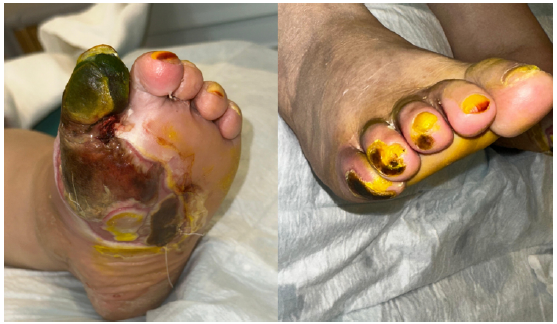
Figure 1 Initial Presentation of Bilateral Thermal Foot Burns, With Extensive Necrosis and Deep Tissue Loss Predominantly Involving the Left Plantar Forefoot
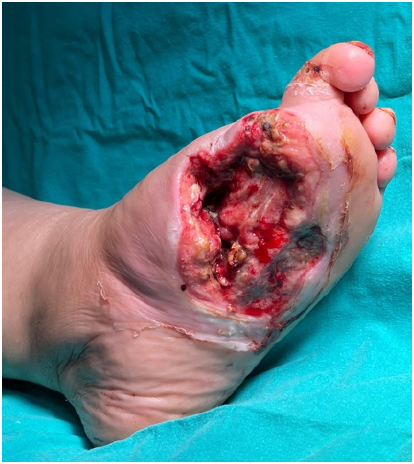
Figure 2 Complex Plantar Defect After Serial Debridement and Toe Amputation,Demonstrating Exposed Deep Structures Before Definitive Reconstruction
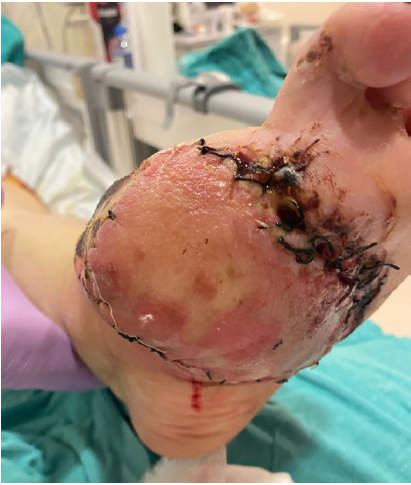
Figure 3 Early Postoperative Appearance of the Free Radial Forearm Flap,Showing Satisfactory Inset and Preserved Clinical Perfusion
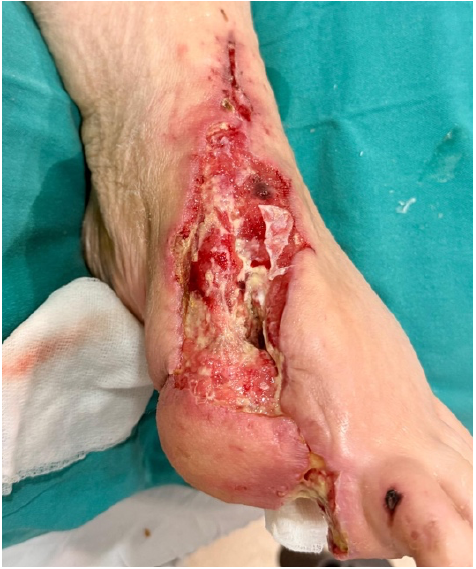
Figure 4 Delayed Healing in the Adjacent Wound Bed Despite Flap Survival, With Dehiscence, Fibrin Deposition, and Marginal Tissue Loss
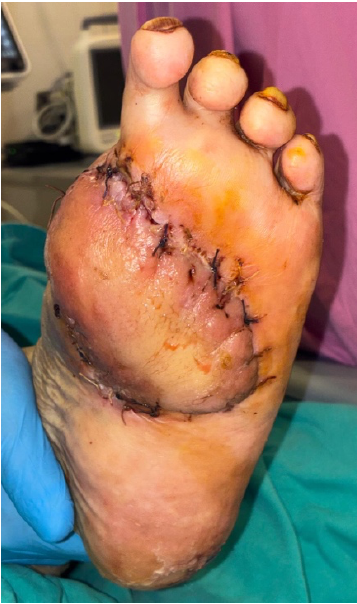
Figure 5 Final Wound Status After Staged Management, Including Repeated Debridement, Negative Pressure Wound Therapy, Grafting,and Local Wound Care