Volume: 5 Issue: 2 June 2025
FULL TEXT
Epidemiologic Profile and Sociodemographic Risk Factors of Pediatric Patients With Scald Burns Aged 5 Years and Below, Seen at a Tertiary Government Hospital
ABSTRACT
OBJECTIVES: Approximately 25% of burn injuries occur in patients under the age of 16, with most of these burns occurring in patients under the age of 5 years. Scald burns predominate this age group and has a significant disparity identified between high-income and low-to-middle-income countries with the occurrence. Most scald burns that occur in these patients are preventable and predictable and yet cause significant morbidity and mortality. The guardians of these patients may be the key in preventing scald burn injuries to children who are not capable of protecting themselves.
MATERIALS AND METHODS: A questionnaire was administered to consenting caregivers of 53 scald burn patients and 50 nonscald burn patients. The questionnaire aimed to determine possible risk factors for children of getting a scald burn based on sociodemographic factors of the family or guardians at the time that the injury occurred.
RESULTS: The caregivers were predominantly mothers of patients (71.84%), with most being between 21 and 30 years (47.17%) for those with scald burns and between 31 and 40 years (50%) for those without scald burns and the majority having, at most, a high school education (45.63%). Injuries frequently happened in the morning (45.28%), within the kitchen (37.74%), with hot water being the primary cause (69.81%). Notably, the guardian was present in the same room when the scald burn occurred (81.13%). There was a significant association between the caregiver’s educational status and the occurrence of scald burns (P = .030), as well as the caregiver’s knowledge about scald burns (P = .001).
CONCLUSIONS: This study was able to determine that lower maternal/caregiver education was associated with an increased risk of scald burns; knowledge about previous scald burn patients could be a protective factor for children aged 5 years and younger. These factors may be used to develop intervention strategies to reduce scald burn injuries in this age group.
KEY WORDS: Burn prevention, Pediatric burns, Public health education
INTRODUCTION
Burn injuries are a public health problem and one of the leading causes of trauma in the world. Burn injuries are major causes of hospitalization and, in turn, morbidity and mortality.1 Such injuries occur in all age groups regardless of sex and with severities ranging from minor outpatient treatment to intensive care admissions. Annually, 256 000 deaths occur worldwide, with the majority occurring in low-and middle-income countries. Almost half of these deaths occur in the South-East Asia region, which includes the Philippines.2
Approximately 25% of burn injuries occur in patients under the age of 16 years, with most of these burns occurring in patients under the age of 5 years.3,4 Scald burns predominate the less than 5-year-old age group. A significant disparity has been identified between high-income and low-to-middle-income countries regarding the occurrence of these burn injuries in the same age group.5 Mortality for this age group, on the other hand, for both developed and developing countries remains increased.6 Scald burns have also had a major effect on the economy. The United States alone has had an estimated annual cost of $2.1 billion in relation to the management and mortality of pediatric scald burns in patients below the age of 14 years. Over half of this involves scald burns in patients aged 4 years and younger.7
According to the American Academy of Pediatrics, it is at 3 years old when children are able to avoid touching hot objects once warned.8 In a study done by Hill and colleagues, children aged 4- to 5-years-old have a rudimentary sense of danger, but is not as developed as that in adults.9 Children during the preschool age of 3 to 5 years old and younger are highly reliant on their guardians for safety, as their concept of danger is not as developed as those of older children. With this, the guardians of these patients may be the key in preventing scald burn injuries to children who are not capable of protecting themselves.
Most scald burns that occur in patients under the age of 5 years are preventable and predictable and yet cause significant morbidity and mortality at increased rates.1,4,7 Acute cases may cause substantial scarring and deformity, resulting in long-term physical and psychological impairment.10,11 Public health interventions are key to limiting these injuries, but data about risk factors are needed to guide these interventions.6
Prevention of these injuries is mostly the responsibility of the parents, guardians, or those in the same household at the time of the incident. Although numerous research has been conducted on burn injuries, most of the research has focused on the acute management or identification of risk factors for prolonged hospital stays and for reducing mortality and morbidity. In the local setting, studies have been done in the Philippine General Hospital and Southern Philippines Medical Center, wherein data on pediatric burns were previously analyzed.12,13 Although these studies provided data on burn injuries, research focused on determining factors in preventing mortality and burn wound infections.12,13 There is a lack of studies that focus on prevention and identifying possible risk factors that may cause the burns from happening in the first place. Although data from other countries are available, socioeconomic status and cultural differences among certain locations can vary and a study done in the local Philippine setting would make the results more personal and tailored to our culture and community.
MATERIALS AND METHODS
Study design
We used a cross-sectional study design. We aimed to determine possible risk factors for children of getting a scald burn based on sociodemographic factors of the family or guardians at the time the injury occurred. The factors included those pertaining to the caregiver, such as age, kinship, educational attainment, alcohol and illicit drug use, smoking consumption, knowledge of other scald injuries in children, household structure, monthly income, number of siblings of the patient, and presence of disability in the patient.
Study population and setting
We included pediatric patients aged 5 years old and less who consulted at the emergency room or outpatient department for scald burns during the study period as part of the scald burn group as long as the caregiver when the scald burn occurred was also present. Pediatric patients aged 5 years old and less who consulted at the emergency room or outpatient department for nonscald causes served as the control group.
After the patients underwent initial resuscitation and emergency management for the sustained injuries or chief complaints and once consent was obtained from the parents or the legally authorized representatives, a data collection form was completed. The data collection form included the patient age, sex, birthplace, birth order, and number of siblings; parent/guardian level of education, occupation, monthly income, and marital status; and living conditions of the family. Circumstances regarding the injury were also recorded: percent total body surface area involved, place of injury, time of injury, and mechanism of injury. A similar form about the socioeconomic status of the patient, caregiver, and their family was completed by the control group.
Risks and benefits
Identified possible risks during the interview included a risk to privacy because of the open area of the emergency room (or OPD), potential delay in giving of appropriate care, sensitive nature of questions as caregivers may be at fault for the injury, and possible biases from the interviewees. Because of these possible risks, the interview was conducted after initial resuscitation and dressing of the burn injuries have been done. The guardian/caregiver was interviewed in an area (cubicle or consultation room) where the person felt safe to give the necessary information. The guardians were also assured of the privacy of their answers.
Statistical analyses
Based on a 2.33 odds ratio of patients with age at injury of 13 to 24 months to have scald burns in comparison with those without injury at age 0 to 12 months, and using G*Power 3.1.9.7, we determined a minimum of a combined 103 patients required for this study for exposed and control groups. This computation also accounted for 5% level of significance and 90% power.
We input all gathered data into Microsoft Excel 2020 version 16.43. We used descriptive statistics to summarize demographic and clinical characteristics of patients. We presented categorical variables as frequency and percent and nonnormally distributed continuous variables as median and interquartile range. We used the Mann-Whitney U test and Fisher exact/χ2 test to determine differences of rank and frequency, respectively, between patients with and without scald burn injuries. We computed odds ratio and corresponding 95% CIs from binary logistic regression to determine significant predictors for scald burn injuries. All statistical tests were 2-tailed tests. We used the Shapiro-Wilk test to test the normality of continuous variables. Missing values were neither replaced nor estimated. Null hypotheses were rejected at 0.05 α-level of significance. We used Microsoft Excel and STATA 13.1 for data management and analysis, respectively.
Ethical considerations
This study underwent and complied with the requirements of the East Avenue Medical Center Institutional Ethics Review Board. The study adhered to the principles of good clinical practice, the 2022 National Ethical Guidelines on Research Involving Human Participants, and the Data Privacy Act of 2012. The protocol also conformed to the ethical guidelines of the 1975 Helsinki Declaration.
RESULTS
Among the computed sample size of 103 patients, 53 scald burn patients and 50 control patients were included in the study (Table 1). Most of the 53 children who experienced scald burns were male (52.83%) and had a median age of 1.67 years. Most of the children did not have disabilities (99.03%) and lived in households with 2 parents (91.26%). No significant differences in sex, age, presence of disability, number of siblings, birth order, or disposition were shown between children with and without scald burn injuries. This suggests that these factors may not be strong predictors of scald burn risk in this population.
Table 2 shows that the caregivers were predominantly the mothers (71.84%), with most being between aged 21 and 30 years (47.17%) for those with scald burns and between 31 and 40 (50%) for those without and having attained a high school education (45.63%). Most caregivers were unemployed, and most households fell into the low-income or lower-middle class categories. A significant association was shown between the caregiver’s educational attainment and the occurrence of scald burns (P = .030), as well as the caregiver’s knowledge about scald burns (P = .001).
The injuries frequently happened in the morning (45.28%) within the kitchen (37.74%), with hot water being the primary cause (69.81%) (Table 3). Most children had burns covering less than 10% of their total body surface area. Notably, in most cases, a guardian was present in the same room when the scald burn occurred (81.13%). These findings highlight the vulnerability of young children to scald burns, particularly in domestic settings, and emphasize the need for targeted prevention strategies.
Since maternal education and knowledge of scald burns were noted to be significant, odds ratio for both were computed. As shown in Table 4, caregivers who have known someone who has had scald burns were 77% less likely to have a child with scald burns under their watch (odds ratio of 0.230). Maternal education was grouped to high school level education and below to calculate the odds ratio. Although the crude odds ratio was 2.017 and the relative risk was 1.4, signifying a negative effect on scald burns, the P value was not significant (P = .102).
DISCUSSION
Among studies performed in different countries to determine possible risk factors for burns in children, research done in Colombia by Amador and colleagues examined sociodemographic factors to determine possible risk factors for scald burns in pediatric patients.4 The factors that they included in their study were sociodemographic factors of the caregiver (age of caregiver, education level of caregiver, kinship of caregiver) and family dynamics of the children (presence of disability, number of siblings, presence of caregiver at time of injury, order of children, parents with anxiety, depression, drug addiction, suspected child abuse).4 The group identified that not having a caregiver present, parents with depression, and a single-parent family were all possible risk factors.4 They were also able to identify having more than 3 siblings as a risk reduction for scald burns.4 A similar study done in Peru identified lack of water supply, low income, and crowding as risk factors for scald burns, whereas presence of a living room and higher maternal education were protective factors.6 In the United Kingdom, a study done by Shah and colleagues identified higher birth order, single adult households, and increasing index of material deprivation to be risk factors, whereas older maternal age was a protective factor.7 All 3 studies advised gathering local data to determine possible safety interventions.4,6,7
In our study, we found lower maternal/caregiver education to be a risk factor for scald burns. Although the P value of the odds ratio was not significant, we noted a trend seen in this population consistent with other studies: decreasing maternal/caregiver education is associated with higher chances of scald burns. In addition, knowledge of someone who has had scald burns was a significant protective factor. Remarkably, of the 28 caregivers in the control group who said that they knew someone with scald burns, 4 of these noted an older sibling of the patient to have had these injuries. Because of these incidents, these caregivers have been more vigilant when taking care of their younger children.
These 2 factors go hand in hand and targeting both can be points for prevention interventions for pediatric scald burns. Awareness campaigns and safety prevention lectures for caregivers may be done on a regular basis to try to address these factors. Fire prevention month can be used and changed to burn prevention month to include other types of burns like scalds and electrical burns. Whether education occurs in the hospital setting or in the local government unit setting or in the barangay level, data are also required to assess the effectiveness of these potential interventions.
Family income and single-parent families have been identified in different studies as risk factors. Family structure differs from culture to culture and may explain the absence or lack of single-parent families in our population, as most the patients belonged to a 2-parent household. Family income may not have been a significant risk factor in our study as this study was done in a tertiary government hospital catering to the underserved and underprivileged. Performing a similar study like this encompassing multiple burn centers all over the country may be more beneficial in creating national policies because our study was limited to the EAMC burn center and the areas it caters to.
Notably, in other studies, a guardian not in the same room as the place of injury was a risk factor for pediatric scald burns. This was not the case in our study as most caregivers (81.13%) were in the same room when the injuries occurred. A study done in the United Kingdom revealed that parents who have taught their children safety instructions while in the household led to significantly less scald injuries.14 This may be another evidence to the importance of awareness and vigilance in preventing these injuries from happening.
Several interventions have been done in other countries to try to prevent scald burn injuries in children. In high-income countries, the prevention of burn injuries can already result in a reduction of mortality rates of up to 50%.4 Changes to prevent these injuries have been put into legislation, whether these are in the design and manufacture of certain products or altering the composition of some household chemicals.4 In Mexico, guidelines have been made with a goal of reducing burn injuries in identified vulnerable groups. These have included installation of fire alarms, regulation of water temperature, promotion of less flammable clothing, and installation of water sprinklers.4 In the United States, the Academy of Pediatrics recommended counseling sessions for injury prevention with cooperation with local community partners like schools and childcare centers.7 In the United Kingdom, primary doctors have been tapped in injury prevention. This is done through a prompt identification of those at risk and a referral to institutions who do home safety assessments.7
To be able to have policies like these in the prevention of burn injuries, the Philippines needs more data on the possible risk factors that lead to the different burn injuries, not limited to scalds and the pediatric age group.
LIMITATIONS AND RECOMMENDATIONS
Our study was limited to scald burn patients aged 5 years old and below and involved patients seen only at 1 tertiary government hospital. Because the center was a tertiary government hospital, patient demographics leaned toward the low to lower-middle income classes. Future work is needed in more institutions or burn centers to get a population more representative of the Filipino population and not just the population served by a tertiary government hospital.
CONCLUSIONS
Burn prevention is important in reducing mortality and morbidity of burn injuries, especially in vulnerable populations like children. This study determined that lower maternal/caregiver education was associated with an increased risk of scald burns, whereas knowledge about previous scald burn patients could be a protective factor for children aged 5 years and below. These factors may be used to develop intervention strategies to reduce scald burn injuries in this age group. Moreover, additional studies are needed to determine the regional or even a national demographic for scald burn injuries to possibly create policies for injury prevention.
REFERENCES
- Rashid KJ, Babakir-Mina M, Abdilkarim D. Characteristics of burn injury and factors in relation to infection among pediatric patients. MOJ Gerontol Geriatr. 2017;1(3):57-66. doi:10.15406/mojgg.2017.01.00013
- Tripathee S, Basnet SJ. Epidemiology of burn injuries in Nepal: a systemic review. Burns Trauma. 2017;24;5:10. doi:10.1186/s41038-017-0075-y
- Krishnamoorthy V, Ramaiah R, Bhananker SM. Pediatric burn injuries. Int J Crit Illn Inj Sci. 2012;2(3):128-134. doi:10.4103/ 2229-5151.100889
- Vergara Amador, Enrique, Hernandez Solano, Manuel A. Risk factors of burns in children from low-income families and without medical insurance. Revista Salud Uninorte. 34(2):263-275. doi:10.14482/sun.34.2.617.11
- Peden M, Oyegbite K, Ozanne-Smith J, et al, eds. World Report on Child Injury Prevention. World Health Organization; 2008; 4, Burns. https://www.ncbi.nlm.nih.gov/books/NBK310640/
- Delgado J, Ramirez-Cardich ME, Gilman RH, et al. Risk factors for burns in children: crowding, poverty, and poor maternal education. Inj Prev. 2002;8(1):38-41. doi:10.1136/ip.8.1.38
- Shah M, Orton E, Tata LJ, Gomes C, Kendrik D. Risk factors for scald injury in children under 5 years of age: a case-control study using routinely collected data. Burns. 2013;39(7):1474-1478. doi:10.1016/j.burns.2013.03.022
- Zubler JM, Wiggins LD, Macias MM, et al. Evidence-informed milestones for developmental surveillance tools. Pediatrics. 2022;149(3):e2021052138. doi:10.1542/peds.2021-052138
- Hill R, Lewis V, Dunbar G. Young children’s concepts of danger. Br J Develop Psychol. 2000;18(Pt 1):103-119. doi:10.1348/0261510 00165607
- Riedlinger DI, Jennings PA, Edgar DW, et al. Scald burns in children aged 14 and younger in Australia and New Zealand—an analysis based on the Burn Registry of Australia and New Zealand (BRANZ). Burns. 2015;41(3):462-468. doi:10.1016/j.burns.2014.07.027
- Lal ST, Bhatti DJ. Burn injury in infants and toddlers: risk factors, circumstances, and prevention. Indian J Burns. 2017;25(1):72-75. doi:10.4103/ijb.ijb_14_17
- Cruz, JJ, Lizardo, JA. A regression analysis of epidemiologic factors affecting survival in pediatric burn patients in a Philippine tertiary burn center (January 2004 – December 2008). Acta Med Philippina. 2011;45(3):20-27.
- Santos SM, Jumao-as JW. 604: epidemiology and microbiologic profile of pediatric burn patients: eight-years’ experience in a tertiary hospital. J Burn Care Res. 2021;42(suppl 1):S154-S155. doi:10.1093/jbcr/irab032.254
- Stewart J, Benford P, Wynn P, et al. Modifiable risk factors for scald injury in children under 5 years of age: a multi-centre case-control study. Burns. 2016;42(8):1831-1843. doi:10.1016/j.burns.2016.06.027

Volume : 5
Issue : 2
Pages : 25 - 30
DOI : 10.6002/bcp.2025.0006
From the 1National Specialty Center for Burn Care, East Avenue Medical Center, Quezon City, and the 2Department of Surgery, East Avenue Medical Center, Quezon City, Philippines
ACKNOWLEDGEMENTS: The authors have not received any funding or grants in support of the presented research or for the preparation of this work and have no declarations of potential conflicts of interest.
CORRESPONDING AUTHOR: Julio Raphael V. Santos, Section of Plastic, Reconstructive and Aesthetic Surgery, Department of Surgery; East Avenue National Burn Center; East Avenue Medical Center, 324 Apo St. Ayala Alabang Village. Ayala Alabang, Muntinlupa City, Philippines
E-mail: jrvsantos715@gmail.com
PHONE: +63 9209694689
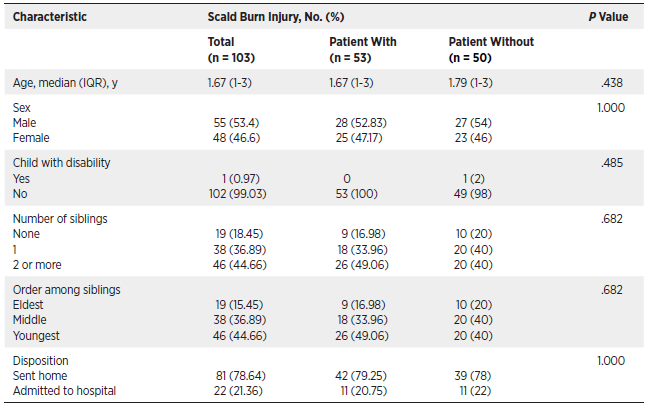
Table 1 Sociodemographic Characteristics of Patients
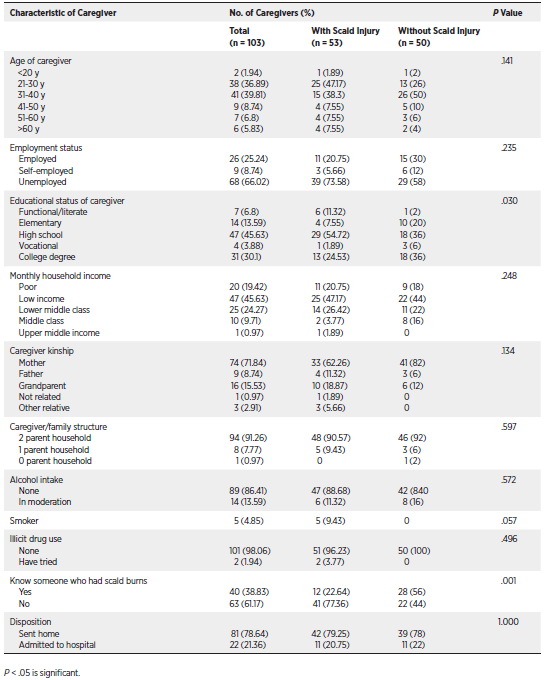
Table 2 Sociodemographic Characteristics of Caregivers of Patients With and Without Scald Injury
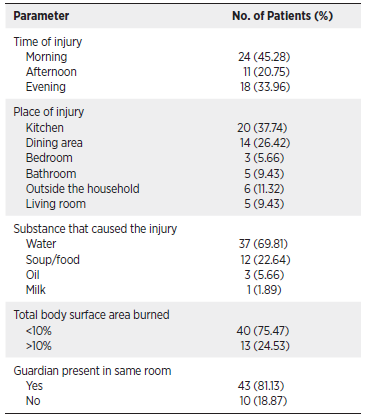
Table 3 Clinical Characteristics of Scald Burn Patients
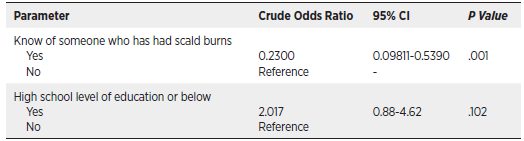
Table 4 Factors Associated with Scald Burn Injuries in Children Under Aged 5 Years