Volume: 5 Issue: 2 June 2025
FULL TEXT
The First Synchronized Virtual Reality and Cadaveric Upper Limb Cadaveric Dissection Course in the United Kingdom: Reflection of Proof of Concept With Virtual Reality in Medicine and Surgery
ABSTRACT
OBJECTIVES: Surgical training faces global challenges, particularly in disaster zones like Gaza. In these settings, innovative solutions like virtual reality offer opportunities to democratize surgical education. Although cadaveric dissection remains the gold standard for anatomical education due to its realism, the practice is limited by high cost, ethical considerations, and accessibility. Here, we introduce a novel course, the first of its kind in the United Kingdom, which combines synchronized virtual reality and cadaveric dissection for upper limb surgery as a “proof of concept.”
MATERIALS AND METHODS: In this 2-day course, we integrated prerecorded virtual reality simulations with live cadaveric dissections. We delivered virtual reality content, created by using Insta360 cameras and Organon 3-dimensional software, via Pico XR4 headsets. Six attendees, ranging from medical students to fellows who completed the Certificate for Completion of Training for Plastic Surgery, participated in sessions led by experienced hand surgeons.
RESULTS: This novel course demonstrated the feasibility and benefits of combining virtual reality and cadaveric dissection for surgical training. By leveraging immersive technology, the course enhanced participants’ understanding, confidence, and engagement, offering a scalable solution for surgical education in diverse settings.
CONCLUSIONS: Our results showed that the proof-of-concept model had functioned as intended. The findings support the annual rollout of this course and broader applications across other surgical subspecialties, addressing the global need for equitable, high-quality training.
KEY WORDS: Augmented reality, Extended reality, Surgical training
INTRODUCTION
Surgical training continues to be affected by global challenges, including a growing population, economic decline, and currently disaster zones such as the conflict in Gaza. The effect of the conflict has resulted in stagnation of local surgical training, a mass migration of doctors, including surgeons, and ultimately, a devasting impact on patient care.1 Therefore, to support surgical training in disaster zones and in low-to-middle income countries, innovative methods of delivering educational content must continue to evolve.
After the surge of socially distanced online and simulated learning courses in response to the COVID-19 pandemic, immersive virtual reality has been described as a powerful potential adjunct to surgical training.2 Surgical training has long incorporated simulation to varying degrees to understand concepts, to visualize surgical approaches, and to ultimately safely and reproducibly perform procedures.3 Although cadaveric dissection remains the gold standard of surgical simulation because of its unparalleled realism and haptic feedback, its high cost, low accessibility, and ethical considerations with the Human Tissue Authority (HTA) are drawbacks that limit opportunities for surgical trainees.4
In contrast, virtual reality aims to reproduce elements of surgical procedures, through rendering 2-dimensional images into 3-dimensional visual spaces to create an immersive, reproducible simulation.2 As the technology has rapidly advanced post-pandemic, so has the haptic feedback, assessment tools, and availability of these tools.5 The advantage of high-quality, low-cost simulation sessions may provide a benefit to surgeons affected by conflict or to surgeons in low-to-middle income countries. However, virtual reality can never completely replace hands-on surgical experience or cadaveric dissection. In a recent collaboration between a UK and a Ugandan hospital, immersive virtual reality was incorporated between the 2 hospitals to provide training across multiple surgical subspecialties.5 In addition to the previously highlighted advantages of virtual reality, such cross-cultural exchange can enhance learning and can offer unique perspectives to clinical scenarios.
“Synchronized” virtual reality has been suggested as a blended approach to surgical simulation through incorporation of the immersive elements of virtual reality with live cadaveric dissection. This approach allows the simulation to provide a 3-dimensional overlay to a scenario, which may further enhance understanding of complex anatomical topics, surgical planning, and managing complications.6
Brighton and Sussex Medical School (BSMS) became the first institution in the United Kingdom to enhance its anatomy and surgical training by incorporating live-streamed cadaveric dissections for both undergraduate and postgraduate students. This innovation aims to develop an online educational resource specifically for surgical trainees. So far, BSMS has presented annual hands-on cadaveric dissection courses, focusing on head and neck reconstruction, which has also included demonstrations of virtual surgical planning. In addition, BSMS has become the “hub” where the Virtual Reality in Medicine and Surgery (VRiMS) group has conducted further collaborative virtual reality simulation courses across several specialties at the undergraduate and postgraduate levels. VRiMS utilized its previous collaboration with BSMS to collaborate with the University of Surrey, who hosted this cadaveric dissection course. Currently, VRiMS is planning a mixed-reality undergraduate teaching program across the United Kingdom. The advantage of synchronized virtual reality, including its potential to democratize surgical training, has led our group to consider new approaches for evolvement. Here, we described the formulation of a novel, plastic surgery-themed course, which utilizes synchronized virtual reality with live cadaveric dissection, as a “proof of concept” for potential annual presentation.
This 2-day, in-person course was conducted by integrating prerecorded, interactive virtual reality simulations utilized during previous courses by VRiMS, with the headsets also provided. Several experienced hand surgeons led upper limb cadaveric dissection, with the attendees being given a “hands-on” experience of complex upper limb anatomy and surgical approaches. The primary goal of our inaugural course was to establish the feasibility of synchronized virtual reality with cadaveric dissection, offering a novel training approach that was accessible across cultural and training-level barriers. The VRiMS group also conducted a further 16 synchronized virtual reality courses for other surgical and medical subspecialties, including trauma and oral and maxillofacial surgery, during the period in which our upper limb course was held. Here, we have outlined the methodology behind establishing the course and offered reflections of the proof of concept.
MATERIALS AND METHODS
Virtual Reality in Medicine and Surgery is a nonprofit group composed of surgeons and trainees across the United Kingdom. The group was formed at the beginning of the COVID-19 pandemic to demonstrate the effectiveness of extended reality, augmented reality, and the metaverse to support global education. After the group successfully implemented multiple extended reality courses internationally, with more than 6000 participants across 101 countries, the group established an innovative approach that uses virtual reality. We utilized prerecorded video content previously captured using Insta360 ONE X 360 cameras. The Insta360 ONE X 360 cameras use two 180-degree cameras placed on a front and rear camera, allowing for a full 360-degree video capture. These were assessed for quality control, both of video content and overall image quality. Once the video content was deemed of sufficient quality, they were then uploaded to VIRTI, a digital storage platform designed to hold immersive learning experiences. This database was deemed suitable to store our video content and could simultaneously synchronize multiple headsets.7 Once the virtual reality headset is placed on the viewer, the viewer is placed in the center of the virtual environment, having a 360-degree view controlled through head movements or controllers associated with the headset. The use of taking images and videos was discussed with the HTA and University of Surrey in advance; only donors who had consented for images were used, and all internal standard operating procedures were followed.
The final digital tool that was integrated into the virtual reality headsets was Organon 3D, an interactive digital platform that provides a virtual 360-degree overlay of human anatomy. Organon 3D allows users in virtual reality to interact with and break down complex anatomical regions, such as the upper limb, providing a much needed 3-dimensional perspective otherwise not available in traditional educational models such as books (Figure 1).8
To support collaboration, we invited multiple trainee and consultants of multiple subspecialties, but primarily plastic and oral and maxillofacial surgeons, for feedback and overall course structure. Course faculty members were consultant plastic surgeons with a specialist interest in hand surgery who are members of the British Surgical Society of the Hand (BSSH). To reflect the credibility of the course, the course was also sponsored and badged by both the BSSH and KLS Martin Group. All participants had consented to be involved in the course. Ethical approval was not required as we did not include participant-sensitive confidential information.
The course utilized the Pico XR4 headsets, which were distributed to course attendees over the 2 days and loaded with the VIRTI and Organon 3D software9 (Figure 2). These headsets required initial investment by VRiMS; however, the headsets have been integrated within the group since 2021. Thus, faculty members were already familiar with the devices prior to the course. Once headsets were in place and started by attendees, interpupillary distances and focal depths were measured via a user-friendly tutorial. To navigate each element of the virtual simulation, each attendee was provided with 2 intuitive controllers that linked to each headset.
RESULTS
The 2-day course timetable (Table 1) was designed based on the Health Education England curriculum requirements for Certificate for Completion of Training (CCT) for Plastic Surgery in the United Kingdom. The course content focused on hand and upper limb surgery and incorporated previously recorded simulation sessions by BSSH-accredited hand surgeons. Recruitment of both faculty and attendees was via established communication channels available to VRiMS, including local hospital departments, email lists, and LinkedIn. Six clinicians of various grades from medical students to post-CCT hand fellows attended the course. To allow familiarization, attendees and faculty were sent reporting instructions and the course timetable before attendance.
The delivery of the content was divided into morning and afternoon sessions, which included a synchronized approach to hand surgery. Each morning session began with virtual reality simulations via VIRTI and Organon 3D for a breakdown of the anatomy, with 1 live (unrecorded) lecture provided by a guest speaker. At the beginning of the course, an introduction to VRiMS and a tutorial of the headsets were provided to ensure smooth transition between simulations. Attendees were then granted multiuser access to the virtual reality simulations to reflect the synchronized approach. Each day concluded with hands-on cadaveric dissection, incorporating what was learned previously during the simulations. Three fresh frozen human cadaveric upper limbs were used for demonstration of the proposed surgical techniques. The remaining cadaveric tissue was used by the other synchronized virtual reality courses that week. The techniques used for the cadaveric dissection followed the traditional models of surgical teaching, including observation and then performance by the attendees.
Nausea from prolonged use of VR headsets has been well described, with a variability in perceived sense of presence and velocity being a contributing factor.10 To address this, we attempted to keep each simulation session to a maximum of 30 minutes, with frequent rest periods of up to 10 minutes offered between sessions.
DISCUSSION
Synchronized virtual reality has been described as approaching augmented and virtual reality through the clinical lens of “real-time” preoperative planning and surgical navigation.6 The ability of virtual reality to provide an interactive overlay on genuine clinical encounters offers both enhanced potential for learning and ample opportunity to correct errors in low-stakes environments. Although virtual reality has historically been used for entertainment, such as gaming, its clinical application has been rapidly expanding. The advantage of an immersive technological device that offers haptic feedback can enhance user engagement, performance, and retention compared with traditional models of surgical education.11 Previous limitations in its widespread use have included unfamiliarity with the technology and the prohibitive costs. However, as the paradigm shift in surgical education veers toward more technological solutions to address global challenges, the long-term cost-effectiveness and remote training opportunities of immersive virtual reality may prove effective.
The immersion of the simulation can be affected by several factors, including the quality of the simulation software, the presentation of the technology, and the data latency. A recent study measured overall latency of a multiuser synchronized virtual reality approach to teaching laparoscopic cholecystectomy.12 The study found that multiple users of the same software can improve server latency through collaboratively identifying frame drops. This synergistic approach contrasts with the traditional view that virtual reality is single-user only. This potential for collaboration within the software further reflects an advantage of synchronized virtual reality that may promote “soft skills” such as teamwork. The collaborative approach to virtual reality can also enhance overall communication, through providing an environment to experience simulations authentically and memorably.13 This can evoke an emotional resonance that strengthens the user’s experience. A previous randomized controlled trial has also demonstrated that virtual reality can simultaneously improve knowledge and self-confidence in surgical trainees.14 Although confidence did not vary between grades of surgeons, more junior surgical trainees experienced the largest overall knowledge growth, deemed likely because of lack of operative experience compared with senior trainees. This may also reflect the perception of future generations of clinicians possibly having more familiarity with the newer technology available to them.
The VRiMS upper limb cadaveric dissection course, which blended synchronized virtual reality with live cadaveric dissection, is the first of its kind in the United Kingdom. Utilization of virtual reality prior to cadaveric dissection improved overall understanding of complex upper limb topics and confidence. The primary learning theory that underpinned the principle of this course was Kolb’s Experiential Learning Theory.15 Kolb describes a 4-stage cycle of learning for comprehension to be attained. These stages follow the andragogical model of learning, where adult learners are actively seeking and are motivated to learn from their experiences. The 4 stages start with Concrete Experience (doing and feeling), Reflective Observation (reviewing or reflecting), Abstract Conceptualization (drawing conclusions), and finally Active Experimentation (application of the material).13 Although this theory is widely used within medical education, the attendees had the opportunity to experience all 4 of the stages through blending virtual reality and cadaveric dissection. The use of novel technology with engaging software allowed users to cycle between Concrete Experience and Abstract Conceptualization. The reproducibility of the virtual reality simulations provided feedback and opportunities to reflect. Finally, the active cadaveric dissection drew multiple concepts together and provided a floor for Active Experimentation and therefore a growth in confidence.
Key strengths of the VRiMS course include the focused nature of topics that prioritized the learning requirements of surgical trainees interested in hand surgery and the variety of plastic surgery techniques that were demonstrated. The 2-day nature was sufficient to cover the proposed volume of content, while allowing reasonable time to experience both the virtual reality and cadaveric learning. The prerecorded simulations provided high-quality video content that was interactive and reliable to use, as shown in previous courses. The presence of haptic feedback with Organon 3D simplified complex upper limb anatomy and aided in conceptualizing different surgical approaches to the upper limb.
Although feedback for the course was overall positive, there were some highlighted areas for improvement on reflection. Fatigue from overuse of the headsets should be considered. Overall course attendance was low compared with previous courses held at VRiMS; however, our model was primarily a proof-of-concept course. By demonstrating that our blended, synchronized model functioned as intended and through hosting multiple similar courses across 16 surgical and medical subspecialties, our proof-of-concept course can be established as a potentially useful adjunct to surgical training. Future blended, synchronized virtual reality courses will be rolled out annually at University of Surrey and BSMS alongside the national undergraduate virtual reality program, which is in progress. With the recent launch of Pico XR4, we foresee further multiuser approaches to collaborative virtual reality and more use of augmented overlays for anatomical teaching.
CONCLUSIONS
The availability of affordable virtual reality headsets, combined with motion-tracking technology, has the potential to sustain and advance surgical education, particularly in low-to-middle income countries and disaster zones. The advantage of democratizing access to high-quality training resources cannot be understated, as they should be made available to surgeons from all backgrounds and cultures.
REFERENCES
- Abukmail E, Albarqouni L. Postgraduate training abroad and migration intentions of medical doctors and students in Gaza: a cross-sectional survey. Lancet. 2021;398(suppl 1):S6. doi:10.1016/S0140-6736(21)01492-6
- Shah S, Diwan S, Kohan L, et al. The technological impact of COVID-19 on the future of education and health care delivery. Pain Physician. 2020;23(4S):S367-S380.
- Mao RQ, Lan L, Kay J, et al. Immersive virtual reality for surgical training: a systematic review. J Surg Res. 2021;268:40-58. doi:10.1016/j.jss.2021.06.045
- McLean SA, Campbell A, Gutridge K, Harper H. Human tissue legislation and medical practice: a benefit or a burden? Med Law Int. 2006;8(1):1-21. doi:10.1177/096853320600800101
- Please H, Narang K, Bolton W, et al. Virtual reality technology for surgical learning: qualitative outcomes of the first virtual reality training course for emergency and essential surgery delivered by a UK–Uganda partnership. BMJ Open Qual. 2024;13(1):e002477. doi:10.1136/bmjoq-2023-002477
- Louis RG, Steinberg GK, Duma C, et al. Early experience with virtual and synchronized augmented reality platform for preoperative planning and intraoperative navigation: a case series. Oper Neurosurg (Hagerstown). 2021;21(4):189-196. doi:10.1093/ons/opab188
- Phiri P, Pemberton L, Liu Y, et al. Tree: reducing the use of restrictive practices on psychiatric wards through virtual reality immersive technology training. World J Psychiatry. 2024;14(10):1521-1537. doi:10.5498/wjp.v14.i10.1521
- Weyant EC, Woodward NJ. 3D Organon VR Anatomy: a virtual anatomy medical education tool. J Elec Resource Med Lib. 2021;18(4). doi:10.1080/15424065.2021.2000911
- Organon 3D. Welcome to Organon 3D. https://www.3dorganon.com/
- Tanaka N, Takagi H. Virtual reality environment design of managing both presence and virtual reality sickness. J Physiol Anthropol Appl Human Sci. 2004;23(6):313-317. doi:10.2114/jpa.23.313
- Wu F, Chen X, Lin Y, et al. A virtual training system for maxillofacial surgery using advanced haptic feedback and immersive workbench. Int J Med Robot. 2014;10(1):78-87. doi:10.1002/rcs.1514
- Gong A, Cheng Y, Su J, Zhang L. Research on hybrid synchronization methods in multi-user collaborative VR simulation medical surgery training system. Concurr Comput. 2024;36(11). doi:10.1002/cpe.8008
- Fenn J, Meany B, Rescober S, Narang K, Dhanda J. Communication in virtual reality as applied to medical education. Arts Human Open Access J. 2024;6(1):56-59. doi:10.15406/ahoaj.2024.06.00222
- Pulijala Y, Ma M, Pears M, Peebles D, Ayoub A. Effectiveness of immersive virtual reality in surgical training—a randomized control trial. J Oral Maxillofac Surg. 2018;76(5):1065-1072. doi:10.1016/j.joms.2017.10.002
- Meyer EG, Battista A, Sommerfeldt JM, West JC, Hamaoka D, Cozza KL. Experiential learning cycles as an effective means for teaching psychiatric clinical skills via repeated simulation in the psychiatry clerkship. Acad Psychiatry. 2021;45(2):150-158. doi:10.1007/s40596-020-01340-8

Volume : 5
Issue : 2
Pages : 19 - 24
DOI : 10.6002/bcp.2025.0005
From the 1Queen Victoria Hospital, the 2University Hospitals Birmingham NHS Foundation Trust, and the 3Brighton and Sussex Medical School, United Kingdom
ACKNOWLEDGEMENTS: We thank all surgical faculty involved in designing and teaching on the upper limb course, including Mr. Robert Pearl, Mr. Christopher Deutsch, and Mr. Jamil Moledina. We acknowledge the use of the ChatGPT language model (3.5), developed by OpenAI, for minor corrections and writing support during the preparation of this manuscript. The authors have no declarations of potential conflicts of interest. We thank the University of Surrey dissection lab for providing cadaveric specimens for the upper limb course and for hosting. We thank Virtual Reality in Medicine and Surgery (VRiMS) for providing access to the Pico XR4 headsets, funding for the cadaveric limbs, and software and thank VIRTI and Organon 3D for access to their software to run the VR simulations. We also thank KLS Martin Group for sponsoring the course and providing tools for the dissections, with special mention to Andrew Cambray.
CORRESPONDING AUTHOR: Hafizul Haq, 100 Stoneywood Brae, Aberdeen, Scotland AB21 9FA
E-mail: hafizulhaq@hotmail.co.uk
PHONE: +01224 7597497769
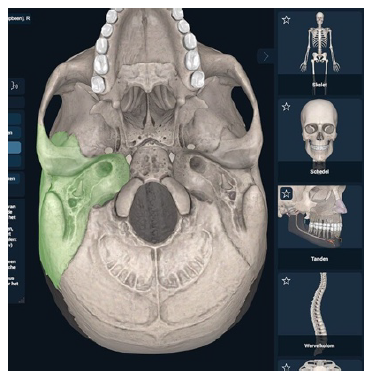
Figure 1 Demonstration of Organon 3D Within the Headset (Organon 3D, 2024)
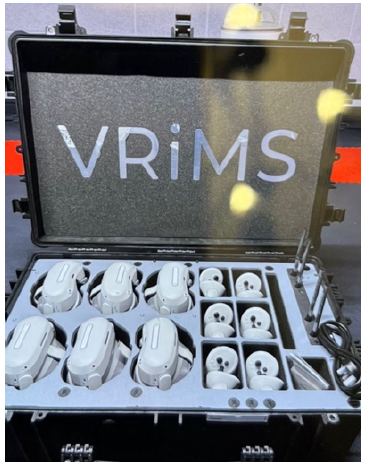
Figure 2 The Pico XR4 Headsets Available to Course Attendees
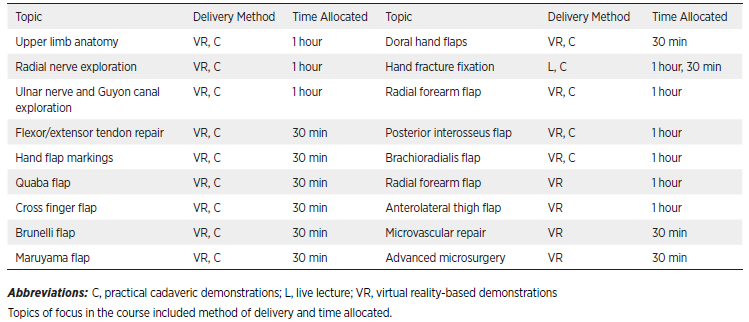
Table 1 Course Content