Volume: 5 Issue: 4 December 2025
FULL TEXT
The Hidden Hazard of the Household Iron: Burns in the Pediatric Population
ABSTRACT
OBJECTIVES: Clothing irons represent a significant source of pediatric thermal injuries. In this study, we investigated the clinical patterns and outcomes of iron-related burns in children.
MATERIALS AND METHODS: We performed a retrospective review of pediatric patients (under age 18 years) who were seen for clothing iron-induced burns at a specialized tertiary burn unit between 2005 and 2025. We collected information on patient demographics, total body surface area affected, burn location, the specific mechanism of injury (active use, pulling the power cord, or the cooling-down period), and subsequent clinical recovery.
RESULTS: Clothing iron-related incidents accounted for 22.3% (n = 90 of 403) of all pediatric contact burns, with 1 additional case involving a steam-related scald. The patient population had a median age of 1.5 years, with 85.7% of cases involving children under aged 4 years. All injuries occurred within a residential setting. The cooling phase was identified as the most hazardous period, causing 70.3% of injuries, followed by cord-pulling incidents at 21.9%. Although the median total body surface area was small at 1% (range, 0.2%-13%), most burns were second-degree burns (92.3%) and primarily localized to the hands (74.7%). Although 97.8% of patients were successfully treated in an outpatient setting without the need for emergency surgery, four patients required specialized physical therapy to prevent long-term joint contractures.
CONCLUSIONS: The household iron acts as a “latent predator,” posing the greatest risk to toddlers while it is cooling down. These hand injuries underscore a major threat to a child’s future manual dexterity. Future prevention efforts should pivot from behavioral advice toward passive safety engineering and mandatory manufacturer design changes to address the dangers of the cooling cycle and the emerging scald risks from modern steam technology.
KEY WORDS: Childhood contact burns, Domestic iron safety, Home accidents, Injury prevention, Pediatric thermal injuries
INTRODUCTION
Pediatric burn trauma remains a critical global health challenge, representing a significant cause of morbidity and long-term disability.1 Within the domestic environment, a space traditionally perceived as safe, children, especially those aged <4 years, are uniquely vulnerable. Their natural developmental drive for exploration, combined with an incomplete perception of danger and significantly thinner dermal layers, makes them susceptible to deeper burns at lower temperatures and shorter exposure times than adults.2,3 Notably, in the majority of these cases, a parent or caregiver is present in the same room or close enough to intervene, highlighting that adult presence does not inherently guarantee prevention.4,5
Among household hazards, the clothing iron is a leading culprit. Recent studies have indicated that the iron accounts for nearly 23% of all pediatric contact burn cases.2 This frequency is attributed to the device’s high thermal mass and its typical placement in common living areas.5 Research has shown 3 primary mechanisms of injury: direct volar contact with the hot soleplate, traction injuries caused by pulling the power cord, and the latent cooling phase, where the appliance retains enough heat to cause deep burns for over 30 minutes after being switched off.6,7
As household technology advances, the nature of pediatric risk is shifting. The rise of high-capacity steam stations and cordless models introduces new dangers, such as larger volumes of scalding water and increased portability to reachable, unconventional locations.2,8 These shifts, combined with cultural factors such as ironing on the floor or low surfaces, necessitate a reevaluation of current home safety interventions.4,9 In this study, we investigated the characteristics, clinical outcomes, and injury patterns of clothing iron-related burns to enhance public awareness and advocate for stricter safety modifications.
MATERIALS AND METHODS
This retrospective study was conducted at a tertiary referral burn center (in Ankara, Türkiye) to analyze pediatric clothing iron-related injuries over a 21-year period (January 2005 through December 2025). Our study population included all patients aged <18 years with burns specifically attributed to domestic irons. Medical records were reviewed for demographic data (age, sex) and clinical parameters, including total body surface area (TBSA) burned and anatomical distribution.
To understand etiology and referral patterns, we documented the mechanism of injury (direct contact, cord traction, or cool-down phase contact), time of injury, duration from injury until admission, and the number of external medical facilities visited prior to referral. Clinical course data included treatment setting (inpatient vs outpatient), requirement for professional physiotherapy, and long-term complications such as hypertrophic scarring or functional impairment. We used SPSS version 25 (IBM-SPSS Inc) for statistical analyses, with quantitative variables expressed as mean or median and minimum to maximum values.
RESULTS
During the study period, 3172 pediatric patients with burn injuries were treated at our center. Contact burns accounted for 13.23% (n = 403) of these admissions. Within the contact burn group, clothing iron-related injuries represented 22.3% (n = 90/403); in addition, 1 case involved a scald injury, bringing the total number of iron-related accidents to 91 patients. The population was predominantly urban (n = 88). Median age of our patient group was 1.5 years (range, 6 months-16 years), with 85.7% (n = 78) of patients being younger than aged 4 years. The male-to-female ratio was 1.12:1 (Figure 1, Table 1).
All 91 injuries occurred within the home environment, with 69.2% (n = 63/91) taking place during daytime hours (06:00-18:00). The latent cooling phase was the most frequent mechanism of injury, accounting for 70.3% (n = 64/91) of cases. Cord traction accounted for 21.9% (n = 20/91) of cases, including the single scald injury caused by a falling steam reservoir. Only 7.7% (n = 7/91) occurred while the iron was actively in use (Table 2).
The mean TBSA burned was 1% (range, 0.2%-13%). Direct referral to our specialized burn center occurred in 69.2% (n = 63/91) of cases (Table 1). Anatomically, the hands were the most frequently affected site, involved in 74.7% (n = 68/91) of cases; 8 of these patients also sustained forearm involvement. The distribution of injuries in regards of age is shown in Figure 2. Ten patients sustained head burns, 4 of whom had concomitant neck injuries (11%). Feet were affected in 7 patients (7.7%), and 1 toddler sustained a gluteal burn while crawling (Table 2).
Most patients were managed successfully in an outpatient setting. However, 2 patients required a 72-hour hospitalization for observation of significant hand edema. No in-hospital surgical interventions were required during the acute phase; outpatient enzymatic/chemical debridement or bedside debridement sessions were sufficient for timely epithelization. Systemic prophylactic antibiotics initiated at referring centers were continued in only 9 patients (9.9%). Home physiotherapy and massage were recommended for 2 to 6 months. Four patients received 8 weeks of professional physiotherapy due to high contracture risk (Table 3).
DISCUSSION
The domestic environment is often falsely perceived as a sanctuary, yet our findings showed that this environment remains the primary site for pediatric burn injuries. Iron-related burns accounted for over 22% of all pediatric contact burns at our center, aligning with both historical3 and current regional data.2 This finding suggested that, despite clinical advancements and safety warnings, the iron remains a stable “domestic predator” in households with young children.
The demographic peak at 1.5 years of age highlights a critical developmental window where mobility outpaces danger perception. In our series, children up to age 4 years comprised the largest at-risk group for iron-related burns, with a high prevalence of injury to the hands. This result confirms that uncontrolled curiosity remains the most frequent risk factor for this age group. Global data have confirmed that the domestic environment is the most frequent site of injury for this age group.6 The high incidence of injuries during the latent cooling phase (70.3%) indicated a gap in parental awareness; clothing irons retain enough heat to cause even full-thickness burns long after being unplugged.7 This is compounded by the “supervision paradox,” where injuries occur despite an adult being in the room, proving that presence is not a substitute for hazard removal.4,5,9 In this context, inattention and negligence, as well as intentional injuries, should be kept in mind; as it is difficult to distinguish an unintentional burn injury caused by an iron in a child from an intentional one.10
Anatomically, the 74.7% prevalence of hand injuries mirrors findings that contact hand burns represent a “major prevention need” based on scientific data,8,11 because hands are of particular importance for an acceptable quality of life after burns. Although the TBSA was small in our study, the functional effect on the palmar surface can be devastating, requiring specialized rehabilitation and massage to prevent contractures.2,12 Our success with outpatient management and low antibiotic use aligned with modern guidelines emphasizing specialized wound care over systemic intervention.11,12
Finally, the evolution of iron technology has introduced a scald risk covering relatively larger body areas through huge steam reservoirs, necessitating new prevention strategies.2 As emphasized in recent literature, the persistence of these injuries demands more aggressive community-based prevention that focuses on the safe storage of the device during its entire cooling cycle.11-14
CONCLUSION AND PREVENTION RECOMMENDATIONS
Burns from clothing irons remain a persistent threat to toddlers. A shift from individual supervision to passive environmental safety is essential. Prevention requires a multi-faceted approach: ironing must occur on high, stable surfaces with a strictly enforced “kid-free zone.” To address the significant risk of the cooling phase, irons should be transferred immediately to heat-resistant wall mounts. Community advocacy must push for mandatory manufacturer safety features, such as insulated soleplate guards and automatic shut-off sensors.
REFERENCES
- Rayner R, Prentice J. Paediatric burns: a brief global review. Wound Pract Res. 2011;19(1):43-48. doi:10.3316/informit.077732051513097
CrossRef - PubMed:
- Abalı AE, Aydoğan C, Türkmen N, Haberal M. Features of contact burns in children and adolescents: a single-center experience. Burn Care Prev. 2025;3:41-45.
CrossRef:
PubMed:
- Haberal M, Uçar N, Bilgin N. Epidemiological survey of burns treated in Ankara, Turkey and desirable burn-prevention strategies. Burns. 1995;21(8):601-606. doi:10.1016/0305-4179(95)00044-c
CrossRef - PubMed - Sakallioğlu AE, Başaran O, Tarim A, Türk E, Kut A, Haberal M. Burns in Turkish children and adolescents: nine years of experience. Burns. 2007;33(1):46-51. doi:10.1016/j.burns.2006.05.003
CrossRef - PubMed - Sozen I, Güldoğan CE, Yastı Ç. Etiology of childhood burns and parental awareness in Turkey. Ulus Cerrahi Derg. 2015;32(3):168-172. doi:10.5152/UCD.2016.3285
CrossRef - PubMed - Mitchell M, Kistamgari S, Chounthirath T, McKenzie LB, Smith GA. Children younger than 18 years treated for nonfatal burns in US emergency departments. Clin Pediatr (Phila). 2020;59(1):34-44. doi:10.1177/0009922819884568
CrossRef - PubMed - Simons M, Brady D, McGrady M, Plaza A, Kimble R. Hot iron burns in children. Burns. 2002;28(6):587-590. doi:10.1016/s0305-4179(02)00077-3
CrossRef - PubMed - Ko YC. A Study of the Hand Operating Thresholds during the Usage of an Electric Steam Iron by College Students. EURASIA J Math Sci Tech Ed. 2017;13(9):6325-6335. doi:10.12973/eurasia.2017.01067a
CrossRef - PubMed:
- Vatansever G, Şimşekli E, Sivaslı İ, et al. Home is not always safe: pediatric unintentional home injuries in a tertiary emergency department setting. J Clin Med. 2025;14(20):7444. doi:10.3390/jcm14207444
CrossRef - PubMed - Amadasi A, Etzold S. Iron contact burns and the path to the diagnosis of child abuse. Leg Med (Tokyo). 2024;70:102474. doi:10.1016/j.legalmed.2024.102474
CrossRef - PubMed - McBride JM, Romanowski KS, Sen S, Palmieri TL, Greenhalgh DG. Contact hand burns in children: still a major prevention need. J Burn Care Res. 2020;41(5):1000-1003. doi:10.1093/jbcr/iraa102
CrossRef - PubMed - Pelizzo G, Calcaterra V, Canonica CP, et al. Burns in early childhood: age-specific causes, risks, management, and implications-a narrative review. Children (Basel). 2025;12(11):1424. doi:10.3390/children12111424
CrossRef - PubMed - Dinçer İ, Balcı UG, Harputluoğlu N, Anıl M. Evaluation of the level of basic first aid knowledge of parents applying to paediatric emergency department. J Pediatr Emerg Intensive Care Med. 2025;12(1):14-21. doi:10.4274/cayd.galenos.2025.27132
CrossRef - PubMed:
- Balseven-Odabaşı A, Tümer AR, Keten A, Yorgancı K. Burn injuries among children aged up to seven years. Turk J Pediatr. 2009;51(4):328-335.
CrossRef:
PubMed

Volume : 5
Issue : 4
Pages : 57 - 60
DOI : 10.6002/bcp.2025.0014
From the 1Burn Center, Burns and Fire Disasters Institute, the 2Department of General Surgery, Faculty of Medicine, and the 3Department of Physical Medicine and Rehabilitation, Burn Center, Burns and Fire Disasters Institute, Baskent University, Ankara, Türkiye
ACKNOWLEDGEMENTS: The authors have not received any funding or grants in support of the presented research or for the preparation of this work and have no declarations of potential conflicts of interest.
CORRESPONDING AUTHOR: Ayse Ebru Abali, Burn and Fire Disasters Institute, Ankara Burn Center, and the Department of General Surgery Baskent University, Ankara, Türkiye
E-mail: aesakallio@gmail.com
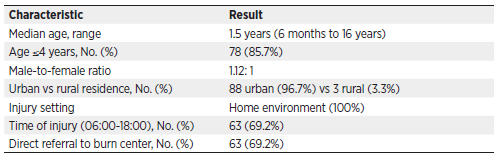
Table 1 Demographic and Epidemiological Profile of the Study Cohort (N = 91)
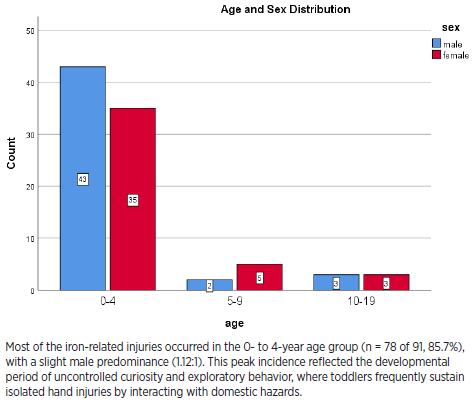
Figure 1 Age and Sex Distribution of Patient Cohort
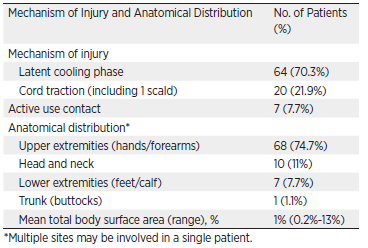
Table 2 Mechanisms of Injury With Clothing Iron and Anatomical Distribution Of Burns
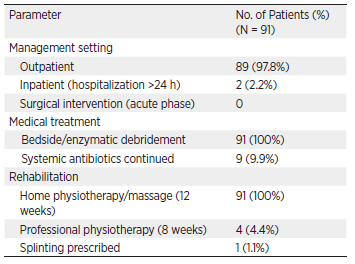
Table 3 Clinical Management, Treatment Modality, and Rehabilitation
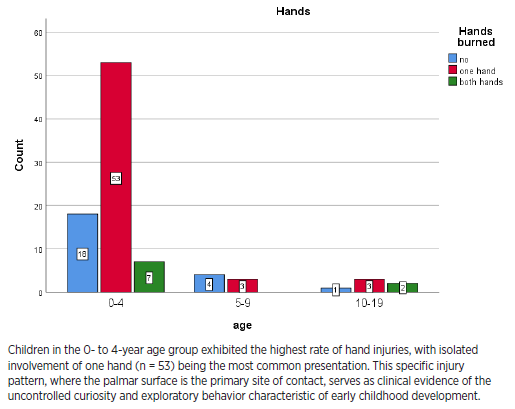
Figure 2 Frequency of Hand Involvement Categorized by Age Group